Integrating top-down and bottom-up approaches for climate adaptation planning and resilient water management
The Global Water and Climate Adaptation Centre - Aachen, Bangkok, Chennai, Dresden (ABCD-Centre), together with its partner institutions, was actively represented at the 10th Asia-Pacific Climate Change Adaptation Forum (APAN Forum) held on 1 October 2025. The Centre co-organized the technical session “Integrating top-down and bottom-up approaches for climate adaptation planning and resilient water management,” bringing together leading experts, practitioners, and development partners to discuss transformative pathways for climate-resilient water management in the Asia-Pacific region.
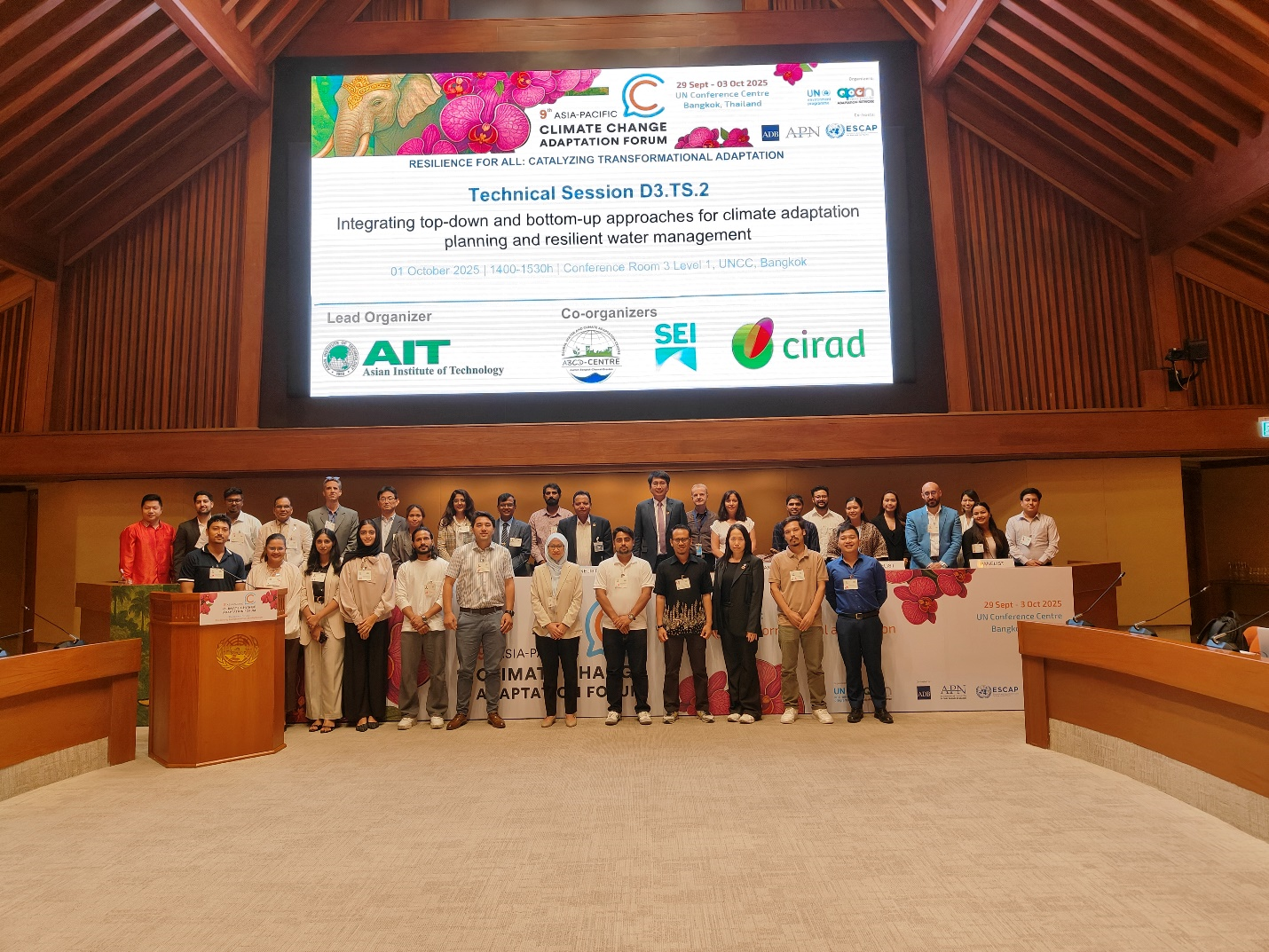
Jointly convened by the Centre for Water and Climate Adaptation (CWCA) at the Asian Institute of Technology (AIT), the ABCD-Centre, the Stockholm Environment Institute (SEI) Asia, and CIRAD, the session explored how large-scale climate science (top-down) and local knowledge, needs, and priorities (bottom-up) can be effectively integrated to strengthen adaptation planning.
Prof. Mukand Babel, Distinguished Professor at AIT and ABCD-Centre partner, served as one of the key speakers, sharing insights on the need for low-GHG adaptation measures and the importance of linking scientific evidence with community-driven resilience actions. The session was moderated by Dr. Srinivasan Ancha (IGES) and featured panelists from UNEP, UNFCCC-IGES RCC Asia Pacific, SEI, CIRAD, and other leading organizations.
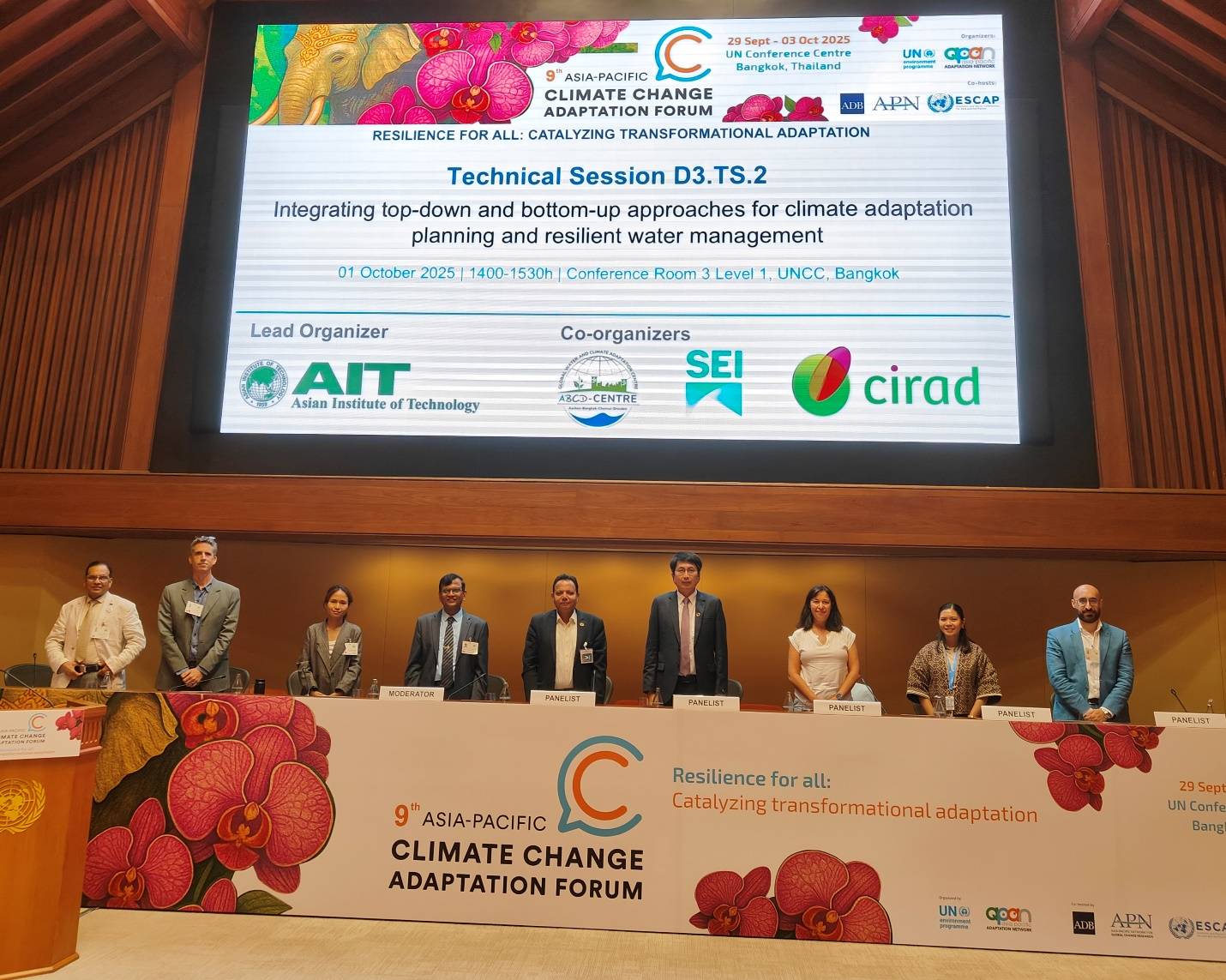
The 90-minute session combined case study presentations from Asia with a dynamic panel discussion. Speakers highlighted practical examples of integrated approaches, including climate risk-informed decision analysis, community-led adaptation in the Mekong region, and drought-resilience partnerships in Thailand. Panelists emphasized critical enablers for transformational adaptation—governance innovation, inclusive planning, realistic financing expectations, strong stakeholder engagement, and avoiding maladaptation through long-term, systems-based thinking
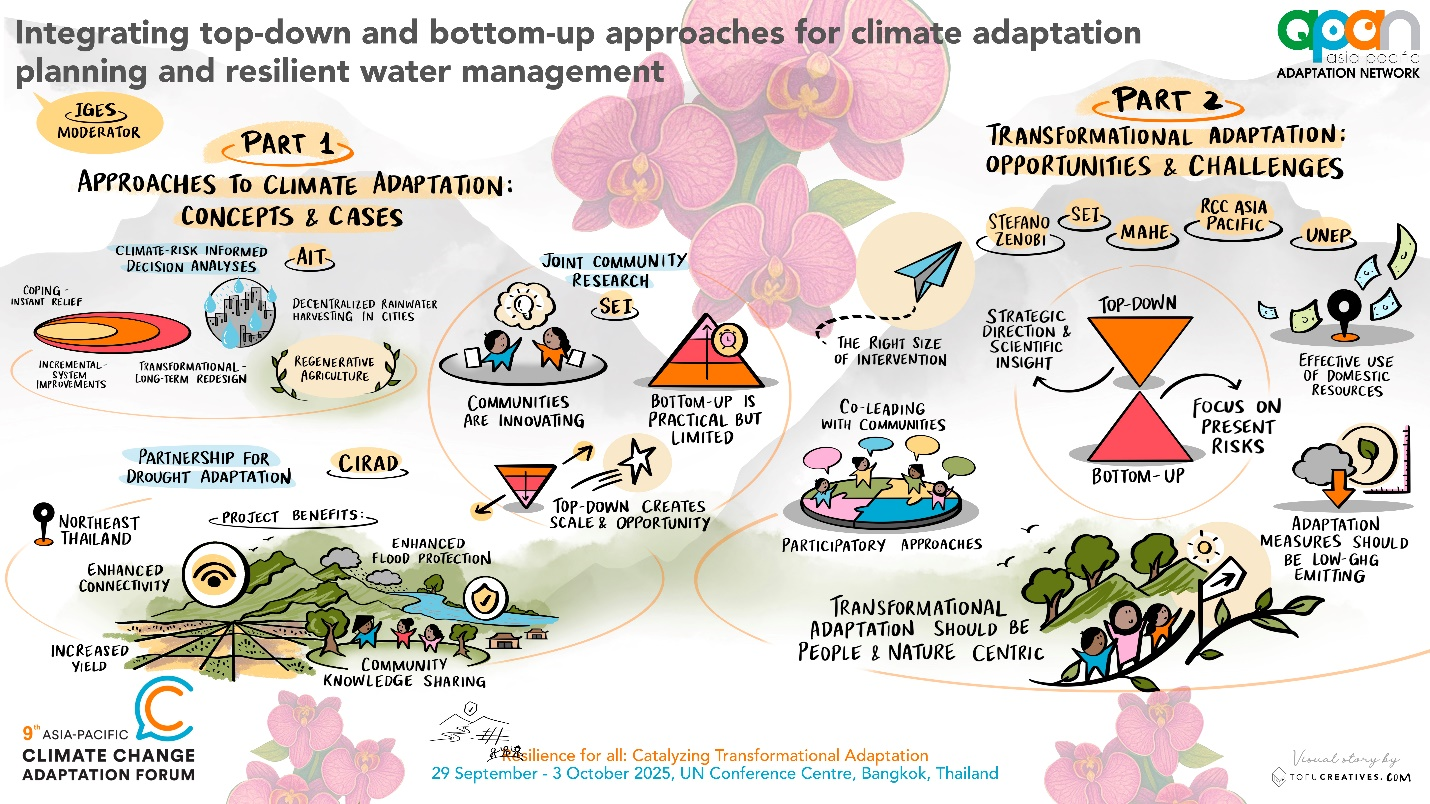
A key takeaway underscored the urgency of aligning national policies with local realities through trust-building and transparent dialogue. Participants stressed that transformational adaptation must remain people- and nature-centric, ensuring that vulnerable communities and ecosystems remain at the heart of adaptation strategies. As summarized by Prof. Babel: “Transformational adaptation cannot be achieved without transformative water management.” The ABCD-Centre remains committed to advancing integrated, science-based, and community-responsive approaches that support resilient development across the Asia-Pacific region.